



Why Every Organisation Needs a Blueprint
Introduction
Organisations today face constant pressure to innovate, reduce costs, improve customer experience, and embrace digital transformation. Yet many change initiatives fail because they focus on technology before understanding the business.
This is where Business Architecture comes in.
Business Architecture provides a blueprint of how an organisation operates by aligning its strategy, capabilities, processes, people, information, and technology. It ensures that every project and investment supports the organisation’s long-term goals and delivers real business value.
Simply put, Business Architecture helps organisations understand what needs to change before deciding how to change it.
The following are reasons why organisations explore business architecture practices in large organisations.
1. Aligning Strategy with Execution
Business Architecture connects an organisation’s vision with day-to-day operations. It ensures that projects are driven by strategic priorities rather than departmental demands.
It creates a clear link between:
Strategy → Capabilities → Processes → Projects → Technology
This alignment helps organisations deliver initiatives that support business objectives.
2. Providing a Business Blueprint
Just as architects design buildings before construction begins, Business Architects design how an organisation should operate before change is implemented.
The blueprint provides a shared understanding of:
- Business capabilities
- Value streams
- Business processes
- Organisational structure
- Information
- Technology
This allows leaders and delivery teams to make consistent, informed decisions.
3. Supporting Better Decision-Making
Business Architecture helps executives answer critical questions such as:
- Which capabilities need improvement?
- Which projects should be prioritised?
- Where should we invest?
- Which processes should be redesigned?
Decisions become evidence-based rather than driven by assumptions or technology trends.
4. Enabling Digital Transformation
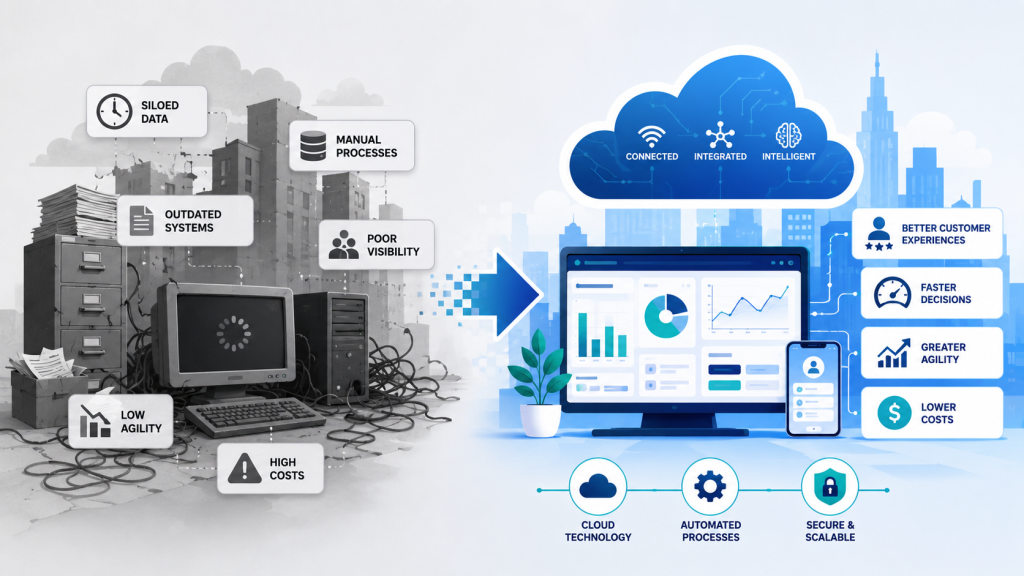
Technology alone does not transform a business.
Business Architecture ensures organisations first improve and simplify their business before introducing new technology.
The guiding principle is simple:
Optimise → Standardise → Digitise → Automate
This ensures technology solves business problems instead of automating inefficient processes.
5. Improving Customer Value
Business Architecture focuses on how value is delivered to customers.
Using Value Streams, organisations can identify bottlenecks, remove unnecessary activities, improve customer experience, and streamline end-to-end services.
The emphasis shifts from internal departments to customer outcomes.
6. Strengthening Business Capabilities
Business capabilities define what an organisation must be able to do, such as Customer Management, Finance, Procurement, or Human Resources.
Understanding these capabilities helps organisations identify gaps, eliminate duplication, and prioritise investment where it delivers the greatest value.
7. Supporting Organisational Change
Every business change impacts people, processes, information, and technology.
Business Architecture helps organisations understand these dependencies before implementation, reducing risk and improving the success of transformation programmes.
Conclusion
Business Architecture is more than a framework—it is the blueprint that connects business strategy with successful execution. It provides the clarity needed to make better decisions, deliver meaningful change, and ensure every initiative contributes to organisational success.
In a rapidly changing world, organisations that understand their capabilities, value streams, and strategic priorities are better equipped to innovate, adapt, and compete. Business Architecture provides that understanding, making it a critical discipline for sustainable growth and long-term success.